Innovations in Component Precision Manufacturing
- alvinwong032
- Nov 10, 2025
- 4 min read
In today’s fast-evolving industrial landscape, delivering high-quality, precision metal products is more critical than ever. Our expertise spans investment casting, forging, stamping, and machining services, enabling us to serve global businesses across automotive, power, farming, construction, and water management sectors. These industries demand reliable, durable, and precisely engineered components to ensure optimal performance and longevity. To meet these expectations, innovation in component precision manufacturing is essential.
Advancements Driving Component Precision Manufacturing
The manufacturing sector has witnessed remarkable technological advancements that have transformed how precision components are produced. These innovations not only improve accuracy but also enhance efficiency and reduce waste. Here are some key developments shaping the future of component precision manufacturing:
Automation and Robotics: Automated systems and robotic arms have revolutionized production lines. They ensure consistent quality by minimizing human error and increasing repeatability. For example, robotic forging presses can apply precise force repeatedly, producing components with uniform mechanical properties.
Additive Manufacturing Integration: While traditional methods like forging and casting remain vital, additive manufacturing (3D printing) is increasingly used for prototyping and producing complex geometries that were previously impossible or too costly to manufacture.
Advanced Materials: The use of high-performance alloys and composite materials has expanded. These materials offer superior strength-to-weight ratios and corrosion resistance, which are crucial for automotive and power generation components.
Real-Time Quality Monitoring: Sensors and IoT devices embedded in manufacturing equipment provide real-time data on temperature, pressure, and dimensional accuracy. This data allows immediate adjustments, reducing defects and improving yield.
Computer-Aided Design and Manufacturing (CAD/CAM): Sophisticated software tools enable precise design and simulation before production begins. This reduces trial-and-error cycles and accelerates time-to-market.

Investment Casting: Precision and Complexity Combined
Investment casting remains a cornerstone of precision metal component manufacturing. This process allows the creation of intricate shapes with tight tolerances and excellent surface finishes. Innovations in this area have focused on improving mold materials, wax patterns, and casting techniques.
Ceramic Mold Enhancements: New ceramic materials used for molds can withstand higher temperatures and provide better dimensional stability. This results in fewer defects and longer mold life.
Wax Pattern Automation: Automated wax injection systems produce consistent patterns, reducing variability and improving the final casting quality.
Vacuum and Pressure Casting: These methods minimize porosity and improve metal flow, leading to stronger and more reliable components.
Investment casting is particularly valuable for producing components with complex internal passages, such as fuel system parts in automotive and aerospace applications.
Forging and Stamping: Strength and Efficiency
Forging and stamping are essential for producing components that require high strength and durability. Recent innovations have enhanced these processes to meet the demands of modern industries.
Precision Forging with Controlled Deformation: Advanced forging presses equipped with sensors can control the deformation process precisely, ensuring uniform grain structure and mechanical properties.
High-Speed Stamping: Modern stamping machines operate at higher speeds with improved die designs, enabling mass production without compromising quality.
Hybrid Processes: Combining forging and stamping with heat treatment or machining in a single production line reduces lead times and improves component consistency.
These improvements are critical for manufacturing parts like gears, shafts, and structural components used in construction and farming equipment.
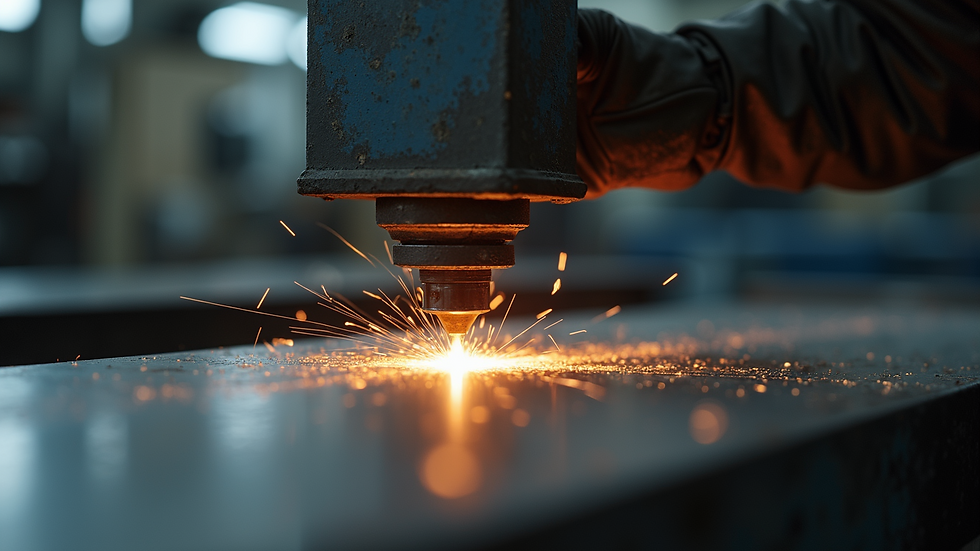
Machining Innovations for Enhanced Precision
Machining remains a vital step in achieving the final dimensions and surface finishes required for precision components. Innovations in this area focus on increasing accuracy, reducing cycle times, and enabling complex geometries.
Multi-Axis CNC Machining: Machines with 5 or more axes allow the production of complex parts in a single setup, reducing errors and improving throughput.
High-Speed Machining (HSM): Using higher spindle speeds and optimized cutting tools, HSM reduces machining time while maintaining tight tolerances.
Advanced Tool Materials and Coatings: Carbide and ceramic tools with specialized coatings extend tool life and improve cutting performance, especially when machining hard alloys.
In-Process Metrology: Integrated measurement systems verify dimensions during machining, allowing immediate corrections and reducing scrap rates.
Machining innovations are particularly beneficial for finishing components used in water management systems, where precision and corrosion resistance are paramount.
Embracing Sustainable and Automated Manufacturing
Sustainability and automation are becoming inseparable from innovation in component manufacturing. Our commitment to sustainable practices aligns with global efforts to reduce environmental impact while maintaining high-quality output.
Energy-Efficient Equipment: Modern machines consume less power and generate less waste heat, contributing to lower operational costs and carbon footprint.
Material Recycling and Waste Reduction: Processes are optimized to minimize scrap, and leftover materials are recycled back into production whenever possible.
Smart Factory Integration: Automation combined with data analytics enables predictive maintenance, reducing downtime and extending equipment life.
Digital Twins and Simulation: Virtual replicas of manufacturing processes help identify inefficiencies and test improvements without physical trials.
By integrating these sustainable and automated solutions, we ensure that our manufacturing processes not only meet but exceed customer expectations while supporting long-term environmental goals.
Partnering for Precision and Reliability
Our goal is to be a top global supplier of high-quality, precision investment casting, forging, stamping, and machining metal products. We achieve this by continuously innovating and adopting automated processes that enhance quality and efficiency. Serving diverse sectors such as automotive, power, farming, construction, and water management, we understand the unique challenges each industry faces.
For businesses seeking reliable and innovative solutions, exploring our precision component manufacturing capabilities can provide a competitive edge. We focus on delivering components that meet stringent specifications and perform reliably in demanding environments.
By leveraging cutting-edge technology and sustainable practices, we help our partners achieve their operational goals while fostering growth and sustainability.


Comments